

The 7 Accounting Red Flags SMEs Ignore And How to Fix Them Before They Hurt Your Business
Accounting red flags often hide in plain sight. Discover the seven warning signs SMEs overlook and how to fix them before they damage cash flow and growth.
In the world of SMEs, accounting issues rarely arrive with flashing lights and sirens. They slip quietly into the business, make themselves comfortable, and then strike at the worst possible moment. Most of the time, the warning signs were there all along and hiding in plain sight.

When accounting red flags pile up, some SME owners feel the pressure long before the numbers tell the full story.
Here are seven of the most common accounting red flags SME owners overlook and how to tackle them before they grow into expensive headaches:
1. Out‑of‑Date Bookkeeping
When your accounting records lag reality, every decision becomes a gamble. If your books aren’t updated weekly, or daily for fast‑moving businesses, you’re steering with last month’s map, and there are new roadworks ahead. Cash flow dries up “unexpectedly”, invoices slip through the cracks, and suppliers start chasing.
Fix it:
Use a structured, repeatable bookkeeping schedule.
Automate data pulls where possible.
Keep a month‑end checklist so nothing gets missed.
2. No Monthly Reconciliations
Accounting reconciliations are the equivalent of brushing your teeth. Skip it once and nothing happens. Skip it for months and things start to fall apart. Without reconciling bank accounts, debtors, creditors and VAT, errors compound unnoticed.
Fix it:
Reconcile all key accounts every month.
Use templates that guide the process and flag differences instantly.
Keep an audit trail. Future‑you will be grateful.
3. Over‑Reliance on “Free‑Form” Spreadsheets
Spreadsheets are brilliant until they aren’t. The danger creeps in when formulas break, Frank types over the formula, links disappear, or 27 versions of the same file circulate by email. Suddenly your P&L depends entirely on whether Frank saved the file correctly.
Fix it:
Use structured, locked‑down templates with defined inputs.
Build automated checks and error flags.
Introduce version control. Or better still, use templates with built‑in controls such as those from Avenor.
4. Unexplained Margins and Cost Creep
Your gross profit has slowly thinned, but nobody knows why. That’s not “the economy”, that’s a red flag waving frantically. Margins shift for a reason: supplier prices increase, wastage, overtime, discounting, or poor pricing discipline.
Fix it:
Track gross profit monthly using ratios.
Compare your performance against benchmarks for your industry.
Investigate variances immediately. Even small leaks sink ships.
5. Customer or Supplier Concentration Risk
If one customer leaving would take your business down with them, you don’t have a customer. You have a dependency. The same applies when one supplier controls the majority of your input costs.
Fix it:
Monitor revenue and cost concentration as part of your monthly reporting.
Set internal limits, e.g., no customer should make up more than 25% of sales. You can sell the same product/service to other customers in the same sector.
Build backup suppliers before you need them.
6. VAT Errors and Compliance Blind Spots
HMRC/SARS/Inland Revenue rarely accepts “I didn’t know” as a defence. Misclaimed VAT, unrecorded reverse‑charge transactions, missing invoices or incorrect VAT codes can cost thousands in penalties.
Fix it:
Run a compliance checklist monthly.
Keep digital copies of all documents.
Use a VAT summary that automatically highlights gaps or anomalies.
7. No Budget or Rolling Forecast
Running a business without a forecast is like driving at night with your headlights off. You’ll get away with it until you don’t. A forecast doesn’t have to be complicated, but it has to exist.
Fix it:
Create a simple, flexible forecasting model.
Update it monthly with actuals.
Use it to plan cash, staffing, and growth with confidence.

“Everything’s fine… until your spreadsheet says otherwise.
Spot the errors before they snowball — here are the 7 accounting red flags SMEs overlook.”
8. The Bottom Line
Issues don’t magically appear. They build quietly through missed reconciliations, delayed bookkeeping, and spreadsheets held together with hope and coffee. By spotting these red flags early, SMEs can protect cash flow, stay compliant, and make better decisions long before trouble arrives.
With a few disciplined processes and the right tools, your accounting can move from firefighting to foresight.
For business solutions that will mitigate red flags, visit https://www.avenor.solutions.

HR Admin: The Silent Productivity Killer in Every SME
HR admin is one of the biggest hidden drains on SME time, energy, and compliance — because unlike big companies, small businesses rarely have dedicated HR teams or systems. The result? Missed deadlines, inconsistent processes, and costly risks. This blog breaks down why HR admin hits SMEs harder, the tasks that create the biggest bottlenecks, and how simple, standardised processes can transform your business from overwhelmed to organised.
At a meeting with one of my SME clients, I watched his expression change from hopeful to horrified, when I asked him:
“How’s your HR admin going?”
Most SMEs love the people part of HR — hiring the right person, celebrating wins, building a great culture. But the admin? That’s where things come undone.

A busy SME owner juggling multiple tasks at once
Why HR Admin Hurts SMEs More Than Large Companies
Big companies have HR teams, systems, and software. SMEs have spreadsheets, emails, and one person doing HR on the side. This creates:
Compliance gaps
Inconsistent processes
Hours of admin lost weekly
1.The HR Admin Tasks That SMEs Struggle With The Most
Onboarding and offboarding
Leave management
Absence tracking
Updating contracts and policies
Payroll inputs
Managing performance issues
2. Why HR Admin Is Not Just Paperwork. It’s Risk Management
Poor HR admin leads to:
Unfair dismissal claims
Right-to-work fines
Payroll errors
Disputes
Morale issues
Lost productivity
3. How SMEs Can Fix the HR Admin Problem
Standardise all processes
Use templates
Use structured systems
Document everything
Review policies annually
Train managers on the basics
4. The Bottom Line
HR admin may not feel glamorous, but when it's organised, everything runs better: onboarding, morale, payroll, compliance, and productivity. HR admin done right is the backbone of a stable, growing SME.

“When HR admin stops feeling chaotic, everything else starts working.”

Marketing Isn’t Magic. It’s a System SMEs Can Actually Master
Marketing only feels mysterious when you treat it like magic instead of a method. The truth? SMEs don’t need big budgets or fancy tricks — just a clear strategy, consistent messaging, and a simple system that attracts the right customers. Here’s how small businesses can master marketing without the overwhelm.
It’s amazing what you learn from social interaction with like-minded SME owners. I like nothing more to sit around a lunch table and listen to what’s on my friends’ minds. It invariably turns to business talk, and I’ve discovered that if you ask most SME owners what marketing feels like, the answer is usually one of the following:
A dark art.
A bottomless money pit.
That thing I’ll sort out when I have time… which I never do.

“Marketing isn’t chaos — it’s a checklist. When you break it into a simple system, suddenly everything feels doable.”
Marketing often gets wrapped in jargon, trends, and shiny tech. But beneath the noise, marketing is simply this: identifying customers you want, understanding what they care about, and showing up consistently where they spend their time.
No smoke. No mirrors. Just a system, and SMEs can absolutely master it.
1.Why Marketing Matters More Than Ever
In a world where customers scroll more than they stroll, marketing is no longer optional. It’s the difference between being discovered or disappearing. Being chosen or being forgotten.
For SMEs, this isn’t about spending like a corporation. It’s about strategy, clarity, and consistency. Get that right, and even the smallest business can compete with bigger players.
2. The Biggest Mistakes SMEs Make (And How to Avoid Them)
Trying to market to “everyone”. If your audience is “anyone with money,” your marketing will land with no one. Define your ideal customer clearly, narrower is stronger.
Overcomplicating the message. Customers decide in seconds. If your value isn’t clear immediately, they move on. Make your message simple: What problem do you solve? Why you? Why now?
Thinking marketing is just social media. Social media is a tool, not a strategy. Marketing also includes SEO, email campaigns, ads, content, partnerships, and real human relationships.
Being inconsistent. Posting in bursts and then disappearing is not a strategy. Consistency beats intensity every time.
3. The SME Marketing System (That Actually Works)
Start with your brand story. Not Shakespeare, just a clear explanation of who you help and why you exist. Customers buy from businesses they trust.
Build trust before selling. Marketing warms people up through blogs, guides, tips, and valuable posts. Show value first; sales follow naturally.
Choose the right channels. Go where your customers actually spend time, not where your competitors happen to be.
Track what works. SMEs waste resources by sticking to methods that no longer work. Data cuts through the guesswork.
4. Marketing Doesn’t Need to Be Costly, Just Clever
A well-written email can outperform a paid advert. A valuable blog can attract leads for years. A helpful LinkedIn post can reach thousands for free. Marketing rewards intelligence, not size.

“No smoke, no mirrors — just a repeatable cycle that brings in the right customers again and again.”
5. The Bottom Line
Marketing isn’t about being loud. It’s about being clear and consistent. Once marketing becomes a repeatable process, your business stops chasing customers and starts attracting them.

SMEs And AI. Embrace It, Don’t Fear It
AI doesn’t have to be intimidating. For SMEs, it’s an opportunity to work faster, save time, and make smarter decisions. This article explores how small businesses can use AI for admin, analytics, marketing, and customer service — without big budgets or technical knowledge.
Artificial Intelligence (AI) has quickly become the buzzword of the decade. For many SME owners, it sounds both exciting and intimidating. Images of robots taking over jobs or machines replacing people have been overplayed in the media. The truth is simpler and far more useful; AI isn’t here to replace small businesses, it’s here to help them work smarter.

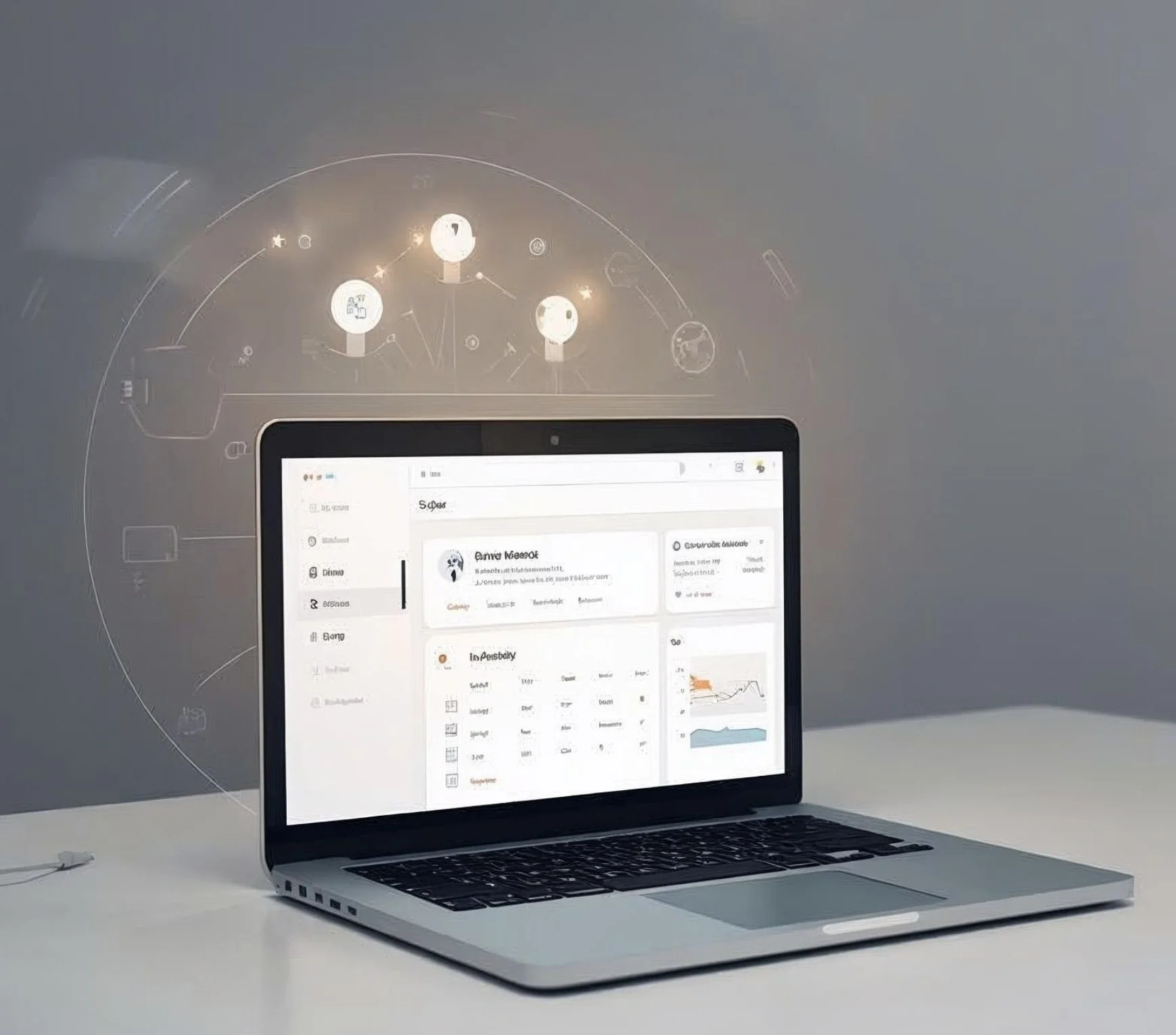
A small business owner using a laptop with soft AI interface elements, illustrating how AI supports everyday tasks for SMEs.
The Fear Factor: Misunderstanding AI
Many SMEs worry that AI is too complex, too expensive, or only relevant to big corporations with tech departments. But today’s AI tools are far more accessible than most realise. You probably use AI already when you auto-sort emails, use predictive text, or let Excel suggest formulas. The “intelligence” in AI is about pattern recognition and automation, not science fiction.
AI isn’t about losing control. It’s about gaining time. For SMEs constantly battling limited hours, cashflow, and compliance demands, AI can act like an extra pair of hands that never sleeps.
History Repeats Itself, For the Better
When computers arrived, they didn’t replace accountants, administrators, or managers. They empowered them. Tasks that once took days, like producing reports, reconciling books, or managing stock, could be done in hours. Productivity soared, costs dropped, and small businesses became more competitive.
AI is doing the same thing. It’s the next logical step in the digital evolution of work — the “new computer” of our era. The businesses that embrace it early will move faster, make smarter decisions, and deliver more value with fewer resources.
Real, Practical Benefits for SMEs
AI’s biggest advantage lies in its ability to handle repetitive, low-value tasks, the kind that drain hours every week but add little strategic value.
Automation of admin: From reconciling accounts to generating invoices, AI can cut paperwork time dramatically.
Smarter insights: AI-driven analytics can turn raw data into clear trends and forecasts, helping you make decisions based on facts, not hunches.
Improved marketing: AI tools can identify your ideal customers, tailor content, and even automate social media scheduling, so you reach the right people with less effort.
Better customer experience: Chatbots, autoresponders, and AI-driven CRM systems ensure customers feel heard 24/7.
Light, helpful AI
A laptop on a clean workspace displaying a business dashboard, with subtle AI interface elements highlighting how AI supports small business tasks.
Levelling the Playing Field
In the past, automation required major investment. The kind SMEs couldn’t justify. Today, cloud-based platforms and affordable tools (including those integrated into Excel, QuickBooks, and marketing apps) have democratised access. You can now implement AI features incrementally, without overhauling your systems or breaking the bank.
AI gives smaller firms something they’ve rarely had before: scalability. It allows an SME to perform with the efficiency of a much larger business, without adding headcount.
The Bottom Line
AI isn’t a threat to small business. It’s a competitive advantage. It won’t replace the relationships, creativity, and intuition that define an SME’s success. Instead, it strengthens them by freeing owners and teams to focus on what truly matters: strategy, growth, and service.
Don’t fear AI. Use it. The future of small business isn’t human or machine; it’s both, working together.
Follow or share Avenor Solutions:

Why Good Accounting Is the Secret Advantage Most SMEs Overlook
Good accounting isn’t just admin — it’s the engine room of a successful SME. When your numbers are clear, decisions become faster, risks shrink, and cashflow becomes predictable instead of stressful. This article explains how strong accounting systems and modern tools can give small businesses a real competitive edge.
In my experience, many SMEs view accounting as a necessary evil; something done in a hurry to meet the demands of bankers, authorities, accountants, etc. Actually, accounting is the foundation for a successful business.

So, I’m sharing some reasons that businesses should consider in their approach to accounting.
1. Accounting Isn’t Just Numbers. It’s your SME’s Control System
The myth says accounting is spreadsheets, invoices, and admin that nobody wants. In reality, accounting for SMEs is about understanding how your business performs.
Strong small-business accounting gives you:
Clear visibility of profitability
The ability to manage cashflow
Early warnings of financial problems
Better pricing decisions
Confidence to expand or invest
Large companies have CFOs and finance teams. SMEs often have one person doing everything, which is exactly why tight financial controls matter even more.
2. Cashflow Management: The Make-or-Break Factor for SMEs
Sales feel good. Profit looks good on paper. But cashflow is reality for any SME.
Most SMEs get caught out by:
Late-paying customers
Mismatched timing between income and expenses – payments to suppliers have to be made before payments are received from customers.
Supplier invoices landing at the wrong moment
Stock sitting on shelves – that expected sale never materialised
Seasonal dips – your customers close and go on holiday
Good accounting systems reveal these patterns early. Cashflow forecasting tools and Excel templates help you predict pressure points before they cause harm.
3. Compliance: Tiresome, but Far Cheaper Than Penalties
VAT, payroll, PAYE, corporation tax are, unfortunately, unexciting but unavoidable.
A well-structured accounting process:
Keeps revenue authorities satisfied
Minimises the risk of penalties
Simplifies income tax, VAT and payroll submissions
Makes year-end accounts easier to prepare
Reduces costly errors
4. Accounting Helps SMEs Grow Safely and Sustainably
SMEs often grow by accident: a big client arrives or demand spikes. Good financial management helps you grow intentionally.

When you can see the numbers, you can steer the business.
Strong accounting helps you:
Identify profitable products/services
Spot inefficiencies
Understand capacity
Apply for funding
Price correctly
5. Modern Accounting Tools Give SMEs Corporate-level Capability
Small businesses now have access to tools once reserved for large businesses:
Cloud accounting software
Automated bank feeds
AI-powered bookkeeping
Cashflow dashboards
Excel-based accounting templates
Tools like Avenor Solutions templates provide structured systems designed specifically for SMEs.
6. The Bottom Line: Accounting Isn’t a Chore. It’s your Superpower
When SMEs get accounting right, they gain control, clarity, growth, and stability.
You don’t have to love accounting, but your business depends on it every day. Master it and you’ll turn your back office into a genuine competitive advantage.
If you’d like to know more about our products or subscribe to our newsletter, feel free to visit us at:
Come and join our community!
Follow or share Avenor Solutions: