

The 7 Accounting Red Flags SMEs Ignore And How to Fix Them Before They Hurt Your Business
Accounting red flags often hide in plain sight. Discover the seven warning signs SMEs overlook and how to fix them before they damage cash flow and growth.
In the world of SMEs, accounting issues rarely arrive with flashing lights and sirens. They slip quietly into the business, make themselves comfortable, and then strike at the worst possible moment. Most of the time, the warning signs were there all along and hiding in plain sight.

When accounting red flags pile up, some SME owners feel the pressure long before the numbers tell the full story.
Here are seven of the most common accounting red flags SME owners overlook and how to tackle them before they grow into expensive headaches:
1. Out‑of‑Date Bookkeeping
When your accounting records lag reality, every decision becomes a gamble. If your books aren’t updated weekly, or daily for fast‑moving businesses, you’re steering with last month’s map, and there are new roadworks ahead. Cash flow dries up “unexpectedly”, invoices slip through the cracks, and suppliers start chasing.
Fix it:
Use a structured, repeatable bookkeeping schedule.
Automate data pulls where possible.
Keep a month‑end checklist so nothing gets missed.
2. No Monthly Reconciliations
Accounting reconciliations are the equivalent of brushing your teeth. Skip it once and nothing happens. Skip it for months and things start to fall apart. Without reconciling bank accounts, debtors, creditors and VAT, errors compound unnoticed.
Fix it:
Reconcile all key accounts every month.
Use templates that guide the process and flag differences instantly.
Keep an audit trail. Future‑you will be grateful.
3. Over‑Reliance on “Free‑Form” Spreadsheets
Spreadsheets are brilliant until they aren’t. The danger creeps in when formulas break, Frank types over the formula, links disappear, or 27 versions of the same file circulate by email. Suddenly your P&L depends entirely on whether Frank saved the file correctly.
Fix it:
Use structured, locked‑down templates with defined inputs.
Build automated checks and error flags.
Introduce version control. Or better still, use templates with built‑in controls such as those from Avenor.
4. Unexplained Margins and Cost Creep
Your gross profit has slowly thinned, but nobody knows why. That’s not “the economy”, that’s a red flag waving frantically. Margins shift for a reason: supplier prices increase, wastage, overtime, discounting, or poor pricing discipline.
Fix it:
Track gross profit monthly using ratios.
Compare your performance against benchmarks for your industry.
Investigate variances immediately. Even small leaks sink ships.
5. Customer or Supplier Concentration Risk
If one customer leaving would take your business down with them, you don’t have a customer. You have a dependency. The same applies when one supplier controls the majority of your input costs.
Fix it:
Monitor revenue and cost concentration as part of your monthly reporting.
Set internal limits, e.g., no customer should make up more than 25% of sales. You can sell the same product/service to other customers in the same sector.
Build backup suppliers before you need them.
6. VAT Errors and Compliance Blind Spots
HMRC/SARS/Inland Revenue rarely accepts “I didn’t know” as a defence. Misclaimed VAT, unrecorded reverse‑charge transactions, missing invoices or incorrect VAT codes can cost thousands in penalties.
Fix it:
Run a compliance checklist monthly.
Keep digital copies of all documents.
Use a VAT summary that automatically highlights gaps or anomalies.
7. No Budget or Rolling Forecast
Running a business without a forecast is like driving at night with your headlights off. You’ll get away with it until you don’t. A forecast doesn’t have to be complicated, but it has to exist.
Fix it:
Create a simple, flexible forecasting model.
Update it monthly with actuals.
Use it to plan cash, staffing, and growth with confidence.
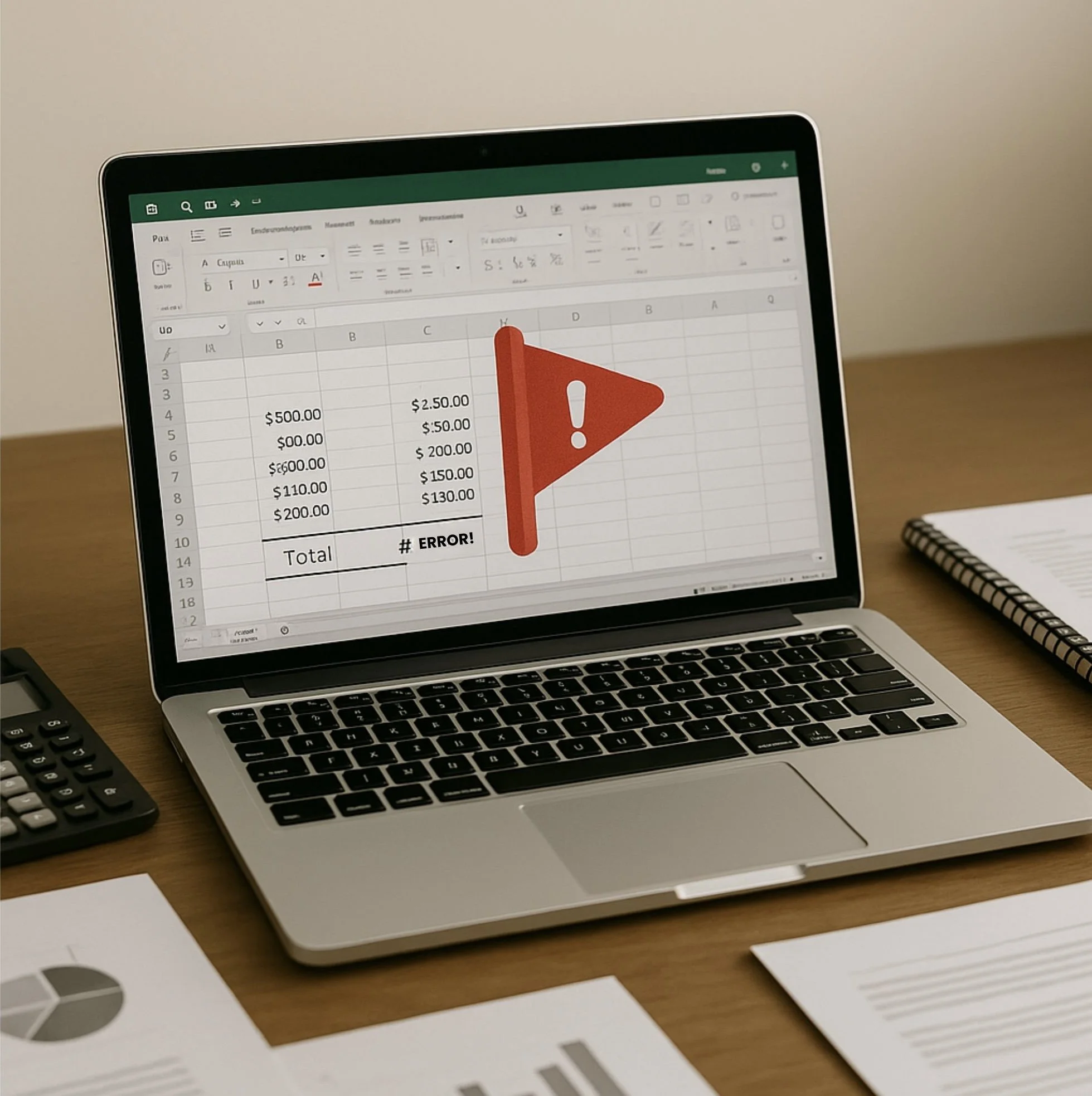
“Everything’s fine… until your spreadsheet says otherwise.
Spot the errors before they snowball — here are the 7 accounting red flags SMEs overlook.”
8. The Bottom Line
Issues don’t magically appear. They build quietly through missed reconciliations, delayed bookkeeping, and spreadsheets held together with hope and coffee. By spotting these red flags early, SMEs can protect cash flow, stay compliant, and make better decisions long before trouble arrives.
With a few disciplined processes and the right tools, your accounting can move from firefighting to foresight.
For business solutions that will mitigate red flags, visit https://www.avenor.solutions.

Why Good Accounting Is the Secret Advantage Most SMEs Overlook
Good accounting isn’t just admin — it’s the engine room of a successful SME. When your numbers are clear, decisions become faster, risks shrink, and cashflow becomes predictable instead of stressful. This article explains how strong accounting systems and modern tools can give small businesses a real competitive edge.
In my experience, many SMEs view accounting as a necessary evil; something done in a hurry to meet the demands of bankers, authorities, accountants, etc. Actually, accounting is the foundation for a successful business.

So, I’m sharing some reasons that businesses should consider in their approach to accounting.
1. Accounting Isn’t Just Numbers. It’s your SME’s Control System
The myth says accounting is spreadsheets, invoices, and admin that nobody wants. In reality, accounting for SMEs is about understanding how your business performs.
Strong small-business accounting gives you:
Clear visibility of profitability
The ability to manage cashflow
Early warnings of financial problems
Better pricing decisions
Confidence to expand or invest
Large companies have CFOs and finance teams. SMEs often have one person doing everything, which is exactly why tight financial controls matter even more.
2. Cashflow Management: The Make-or-Break Factor for SMEs
Sales feel good. Profit looks good on paper. But cashflow is reality for any SME.
Most SMEs get caught out by:
Late-paying customers
Mismatched timing between income and expenses – payments to suppliers have to be made before payments are received from customers.
Supplier invoices landing at the wrong moment
Stock sitting on shelves – that expected sale never materialised
Seasonal dips – your customers close and go on holiday
Good accounting systems reveal these patterns early. Cashflow forecasting tools and Excel templates help you predict pressure points before they cause harm.
3. Compliance: Tiresome, but Far Cheaper Than Penalties
VAT, payroll, PAYE, corporation tax are, unfortunately, unexciting but unavoidable.
A well-structured accounting process:
Keeps revenue authorities satisfied
Minimises the risk of penalties
Simplifies income tax, VAT and payroll submissions
Makes year-end accounts easier to prepare
Reduces costly errors
4. Accounting Helps SMEs Grow Safely and Sustainably
SMEs often grow by accident: a big client arrives or demand spikes. Good financial management helps you grow intentionally.

When you can see the numbers, you can steer the business.
Strong accounting helps you:
Identify profitable products/services
Spot inefficiencies
Understand capacity
Apply for funding
Price correctly
5. Modern Accounting Tools Give SMEs Corporate-level Capability
Small businesses now have access to tools once reserved for large businesses:
Cloud accounting software
Automated bank feeds
AI-powered bookkeeping
Cashflow dashboards
Excel-based accounting templates
Tools like Avenor Solutions templates provide structured systems designed specifically for SMEs.
6. The Bottom Line: Accounting Isn’t a Chore. It’s your Superpower
When SMEs get accounting right, they gain control, clarity, growth, and stability.
You don’t have to love accounting, but your business depends on it every day. Master it and you’ll turn your back office into a genuine competitive advantage.
If you’d like to know more about our products or subscribe to our newsletter, feel free to visit us at:
Come and join our community!
Follow or share Avenor Solutions: